
How to choose the right online tutor for you
How to choose an online tutor: set the goal first, what to read on a profile, what to test in lesson one, and when switching is the right call.
Start with your goal: conversation, exams, or fun
Before you search for a single tutor, write down in one line what you're learning for. Whether your goal is free conversation, an exam like TOPIK, or simply enjoying dramas and K-pop more, the right tutor looks completely different.
For conversation, you want a tutor who maximizes your talking time and corrects well; for exam prep, one who knows that exam's question formats; for a hobby, whether the lesson is fun matters more than anything, because fun is what keeps you coming back. A clear goal changes what you look for in every profile.
What to check on a tutor's profile
Check three things on a profile. First, whether the bio and subjects match your goal — is this tutor a conversation specialist, or experienced with exam prep? Second, the languages the tutor speaks: as a beginner, a tutor who can explain things in your native language or English makes life much easier.
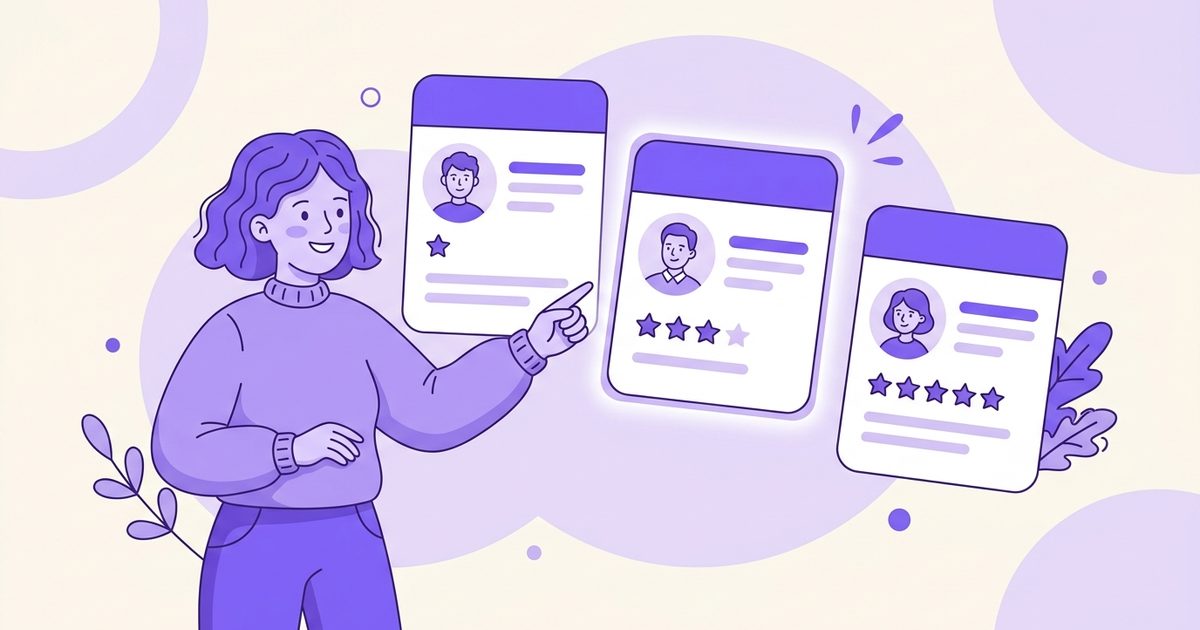
Third, ratings and student reviews — and read the text, not just the stars. Repeated specific comments like "explains things simply" or "corrects thoroughly" are a reliable signal. If there's an intro video, watch it: it tells you the tutor's pronunciation, pace, and vibe before you spend anything.
What to test in the first lesson
Your first lesson is both a class and an audition — for the tutor. Watch how much of the time you spent speaking, whether corrections were clear without constantly breaking your flow, and whether the tutor adjusted their speed and vocabulary to your level.
At the end, ask about the plan going forward. A tutor who hears your goal and proposes a concrete direction is a good sign; if every lesson seems like it will be improvised, that may not suit a learner with a specific target.
When to switch tutors
The beauty of online tutoring is that switching costs almost nothing. Still, don't judge on one awkward session — first lessons are for feeling each other out. If after two or three lessons you're still not getting enough speaking time, real corrections, or a prepared tutor, that's when switching makes sense.
The test isn't "is this tutor nice?" but "am I moving toward my goal?" A kind lesson with no progress is worth less than one that pinpoints your weaknesses. When you do switch, tell the new tutor what worked and what didn't before — it shortens the adjustment period dramatically.
Searching for a Korean tutor near me? In-person vs online
If you've been typing "Korean tutor near me" or "Korean classes near me" into Google, here's the honest picture: unless you live in a city like New York, London, or Los Angeles, there may be only a handful of Korean tutors within reach — and no guarantee any of them fit your goal, whether that's conversation, exam prep, or a hobby. For a 1-on-1 language lesson, the gap between in-person and online is smaller than most people expect, while the gap in choice is much bigger.
| What matters | Local in-person tutor | Online tutor |
|---|---|---|
| Choice of tutors | Whoever happens to live nearby | Pick by goal and price from tutors worldwide |
| Comparing prices | Local going rate, hard to compare | Rates and reviews side by side on profiles |
| Commute | Travel time on top of every lesson | None — join from your browser |
| Scheduling | Fixed weekly slot | Book per slot, time zones auto-converted |
| Exam and specialist lessons | Specialists rarely live nearby | Search directly for TOPIK and other specialists |
In-person still wins in some cases — young learners who struggle to focus on a screen, or lessons built around handwriting. But for adult 1-on-1 conversation or exam prep, the lesson itself runs identically over video, and the criteria for choosing a tutor (everything above in this guide) are the same either way.
Start from a verified tutor pool
These criteria apply wherever you look, but the quality of your starting pool varies. Tutors on Haru go through profile review and approval before teaching, and each profile shows the bio, languages, subjects, ratings, and reviews in one place — so you can test the fit with a low-stakes 25-minute lesson.
Frequently asked questions
How many tutors should I compare before choosing?
Shortlist three to five by profile, then take a short lesson with your top one or two. The chemistry a profile can't show reveals itself in the first lesson.
Is a native-speaker tutor always better?
Not always. At the beginner stage, a tutor who can explain grammar in your language may serve you better, while native tutors shine for intermediate-and-up conversation practice. It depends on your level and goal.
What happens to my lessons if I switch tutors on Haru?
On Haru, when a valid cancellation or refund applies, your payment is returned as Haru credit you can spend on lessons with another tutor. Before booking, compare each tutor's price and reviews right on their card.
Isn't an in-person Korean tutor near me better than online?
For an adult 1-on-1 language lesson, the lesson itself runs identically over video. The real difference is choice: outside major cities there are rarely more than a few Korean tutors nearby, while online you can compare tutors worldwide by goal and price. In-person can still be the better fit for young learners who find screens hard to focus on.
Find the tutor that fits you