
Korean Honorifics: How Speech Levels Actually Work
Korean honorifics are three systems, not one switch — the sentence ending, the -(으)시- infix, and words that change entirely, like 먹다 to 드시다.
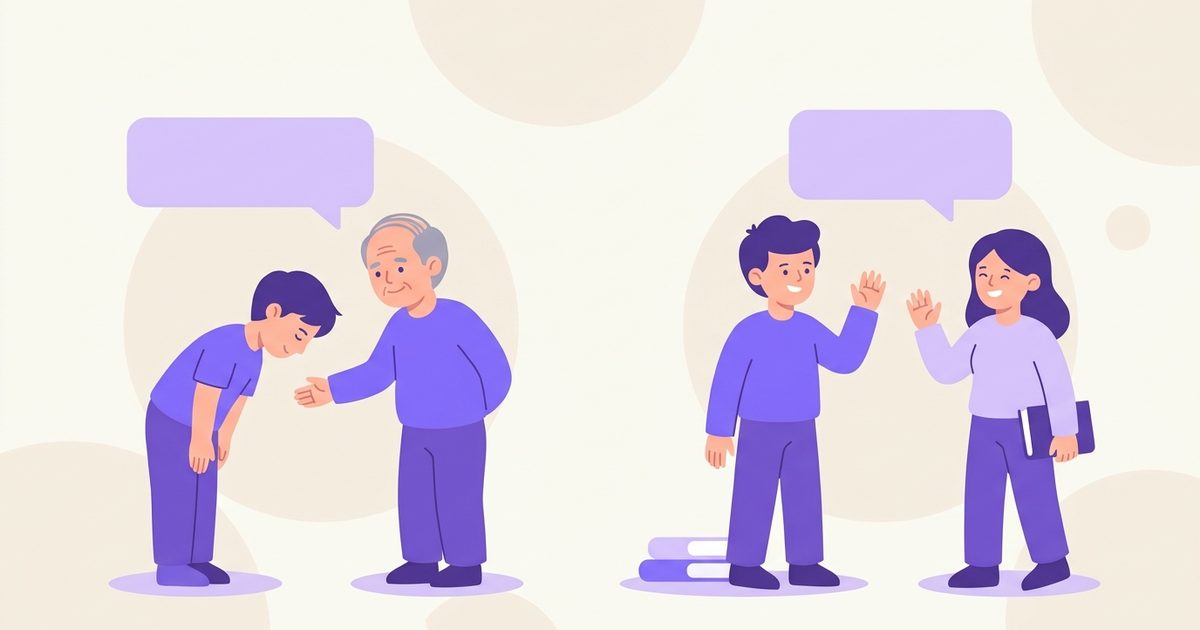
Politeness is layered, not binary
Learners usually picture Korean politeness as a switch between polite and casual. In practice three systems move independently: the sentence ending, which addresses the listener; the infix -(으)시-, which elevates the subject of the sentence; and special vocabulary that swaps the word outright.
This is why a sentence can be polite and still land wrong. Using a polite ending while omitting -(으)시- addresses the listener respectfully but leaves their own action unelevated: a mismatch native speakers notice immediately.
Sentence endings: three levels are enough
Textbooks sometimes list six speech levels; modern spoken Korean effectively uses three. A beginner only needs the middle one to be safe everywhere.
| Level | Example — 가다 (to go) | Who you use it with |
|---|---|---|
| 하십시오체 (formal) | 갑니다 / 가십니다 (gamnida / gasimnida) | Presentations, news, customer service, official writing |
| 해요체 (polite) | 가요 / 가세요 (gayo / gaseyo) | Most daily situations — the beginner default |
| 해체 (casual) | 가 / 간다 (ga / ganda) | Close friends, people younger than you, talking to yourself |
하십시오체 is respectful but distant: think of how shop staff address customers. 해요체 is polite and warm at the same time, which is why it works with everyone from a stranger to a colleague.
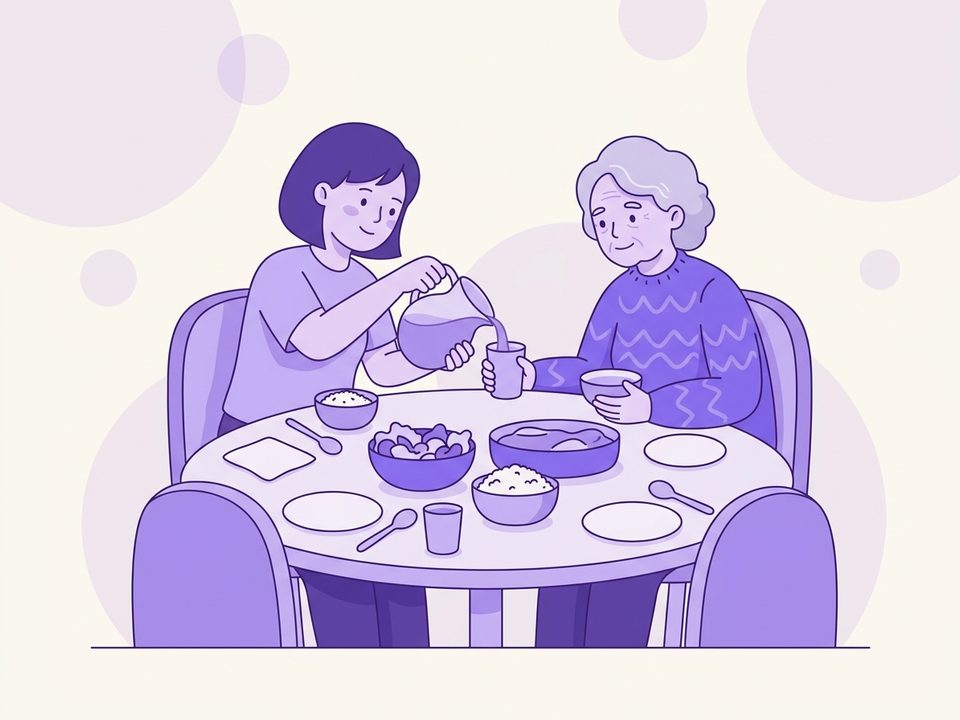
The infix that elevates the subject
-(으)시- raises the subject of the sentence, independent of the ending. You slot it into the verb when talking about what the other person did: 선생님이 왔어요 is grammatical but disrespectful, while 선생님이 오셨어요 is what a native speaker says.
| Plain | Honorific | Used when |
|---|---|---|
| 가요 (gayo) | 가세요 (gaseyo) | The person going is your senior |
| 했어요 (haesseoyo) | 하셨어요 (hasyeosseoyo) | Describing what a senior did |
| 바빠요? (bappayo?) | 바쁘세요? (bappeuseyo?) | Asking about the other person's state |
One hard rule: never apply -(으)시- to yourself. 제가 가세요 elevates the speaker and sounds absurd to a native ear: and it is among the most common learner mistakes.
When the word itself changes
A handful of everyday words have suppletive honorific forms: entirely different words rather than a modified ending. There are not many, but every one of them is high-frequency.
| Plain | Honorific | Meaning |
|---|---|---|
| 먹다 / 마시다 | 드시다 / 잡수시다 | to eat, to drink |
| 자다 | 주무시다 | to sleep |
| 있다 | 계시다 | to be present (for people) |
| 말 | 말씀 | words, what someone said |
| 나이 | 연세 | age |
| 생일 | 생신 | birthday |
| 집 | 댁 | home |
| 이름 | 성함 | name |
Particles and address terms shift too: the subject marker 이/가 becomes 께서, the dative 에게 becomes 께, and names take 님 or 씨. 님 is more respectful than 씨 and usually attaches to a title — 선생님 (teacher), 과장님 (manager).
Check yourself
Why does 제가 가세요 sound wrong?
A safe default while you learn
- End every sentence in 해요체 — 가요, 먹어요, 좋아요.
- Add -(으)시- when the subject is the other person — 가세요, 하셨어요.
- Never use -(으)시- about yourself.
- Memorize just a few suppletive forms: 드시다, 주무시다, 계시다, 연세, 성함.
- Do not switch to casual speech until the other person proposes it.
Mistakes here are usually forgiven: a learner slipping into casual speech gets a smile, not offense. Over-politeness, meanwhile, costs nothing at all, which is why erring upward is always the safe bet.
Frequently asked questions
How many Korean speech levels are there?
Grammars list up to six, but modern speech effectively uses three: formal 하십시오체, polite 해요체, and casual 반말. Beginners can rely on 해요체 alone in nearly every situation.
When do I use -(으)시-?
Whenever the subject of the sentence is someone you should elevate, as in 선생님이 오셨어요. Never when the subject is you — 제가 가세요 would be elevating yourself.
Is it rude to always use polite Korean?
Not at all — being slightly too polite is never a problem in Korean, while the reverse is. When a relationship gets closer the other person typically proposes dropping the polite forms, and you can simply follow their lead.
Find the tutor that fits you